Introduction
Measles in children is a highly contagious viral illness. It spreads easily from person to person. Although measles is rare in some places, it still affects many kids worldwide. In the United States, most cases happen in children who have not been vaccinated. Early detection and care are important. Because measles can lead to serious problems, parents should know the signs and how to prevent it.
Symptoms
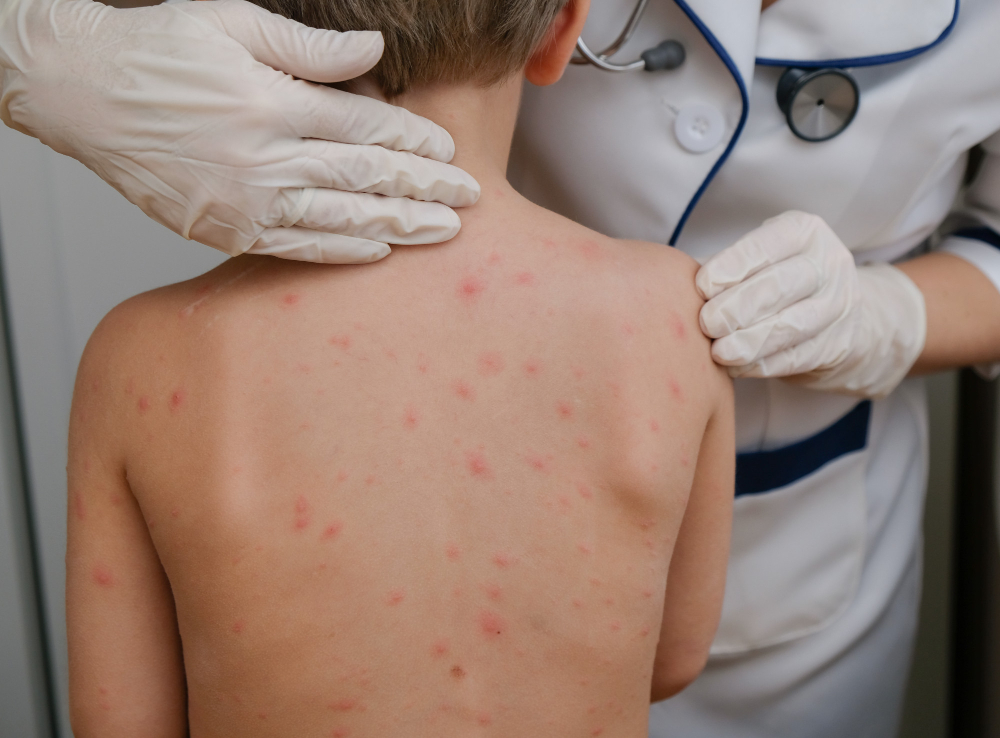
Measles symptoms in kids often appear 10 to 14 days after exposure. At first, the signs may seem like a common cold. However, the illness quickly becomes more serious. Common symptoms include:
Usually, the rash appears three to five days after the first symptoms. As the rash spreads, the fever may rise even higher. Because these signs can look like other illnesses, it is important to watch for the full pattern.
Causes and Risk Factors
Measles in children is caused by the measles virus. The virus spreads through the air when an infected person coughs or sneezes. Even after the person leaves the room, the virus can stay in the air for up to two hours. Children are at higher risk if they:
Because measles is so contagious, one sick child can infect many others. That is why vaccination is so important.
Diagnosis
Doctors diagnose measles in children by looking at the symptoms and medical history. Often, the rash and white spots in the mouth are strong clues. However, to confirm the diagnosis, the doctor may order:
Early diagnosis helps prevent the spread of measles to others. If you think your child may have measles, call your doctor before visiting the clinic. This helps protect other patients.
Treatment Options
There is no specific cure for measles in children. Instead, treatment focuses on easing symptoms and preventing complications. Most children recover at home with rest and care. Doctors may recommend:
In some cases, children may need hospital care. This is more likely if they develop breathing problems or other serious issues. Because measles can cause ear infections, pneumonia, or brain swelling, close monitoring is important.
Prevention Strategies
The best way to prevent measles in children is through vaccination. The MMR vaccine protects against measles, mumps, and rubella. Children usually get two doses:
Besides vaccination, you can help prevent measles by:
Because outbreaks can happen, especially in areas with low vaccination rates, staying up to date on shots is key.
Lifestyle and Home Care Tips
While your child recovers from measles, home care is important. Here are some tips to help your child feel better:
Because measles can weaken the immune system, watch for new symptoms. If you are unsure, call your doctor for advice.
When to See a Doctor
Although most children recover, measles can be serious. You should call your doctor if your child:
Because early care can prevent complications, do not wait if you are worried.
Conclusion
Measles in children is a serious illness, but it can be prevented. Vaccination is the best protection. If your child shows symptoms, seek medical advice right away. For the best care, consult a pediatrician at Sri Ramachandra Children’s & Dental Hospital Guntur for personalized guidance.